Is Trex really maintenance-free, or is that just a sales pitch?
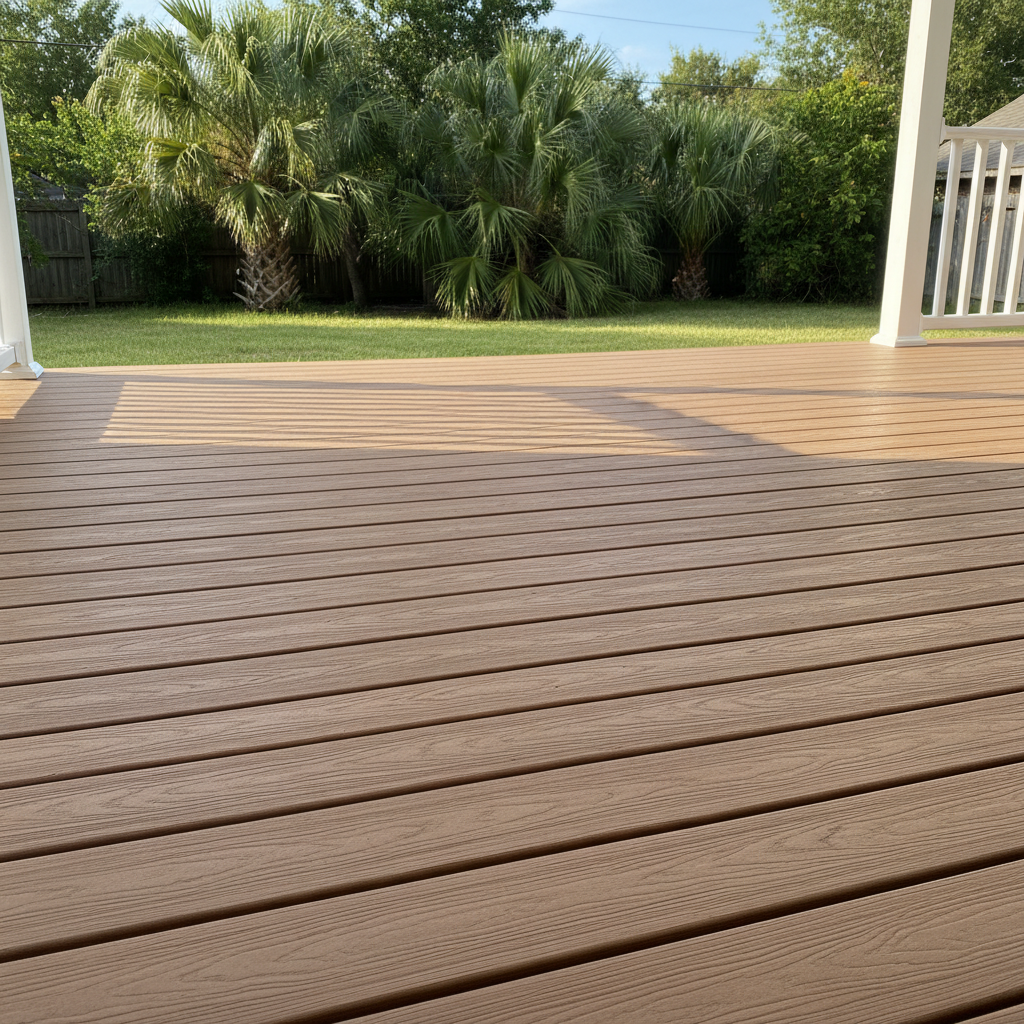
Look, nothing is truly “maintenance-free” unless it's not there at all. But Trex comes pretty darn close, especially compared to wood. You won't be sanding, staining, or sealing it every year, which is a huge win for homeowners down here. I've seen plenty of beautiful cedar or redwood decks get absolutely hammered by our South Texas sun and humidity in just a few years if they're not meticulously cared for. With Trex, you're mostly looking at a good cleaning now and then. A little soap and water, maybe a pressure washer on a low setting, and you're good. It's about as close to set-it-and-forget-it as you're going to get for an outdoor living space.
How does Trex hold up to our Brownsville heat and humidity?
This is a big one, right? Our summers are no joke. The good news is Trex is built for this kind of weather. It's engineered to resist fading, staining, and mold, which are all major concerns in our climate. Unlike wood, it won't rot, warp, or splinter from constant exposure to moisture and high temperatures. I've installed Trex decks all over Brownsville, from the older homes near the Historic District to the newer developments out towards Olmito, and they stand up to our brutal heat and the occasional tropical downpour without a problem. You might feel it get warm underfoot on a scorching day, just like any dark surface, but it's not going to degrade like wood will.
Is Trex slippery when it's wet, especially after a good rain?
That's a fair question, especially with our humidity and sudden thunderstorms. Trex decking is designed with a textured surface, which helps a lot with traction. It's generally less slippery than smooth, wet wood. Now, if you've got a build-up of algae or mildew on it, like anything outdoors, it can get slick. But that's where that occasional cleaning I mentioned comes in. Keep it clean, and you shouldn't have any major issues with slipperiness. It's definitely something I consider when I'm helping folks design their outdoor spaces, especially around pools.
What's the real cost difference between Trex and a traditional wood deck?
Okay, let's talk brass tacks. Upfront, Trex is almost always going to cost more per linear foot than pressure-treated lumber or even some premium hardwoods. There's no way around that. But that's just the initial sticker price. When you factor in the long-term costs – no annual staining, sealing, or replacing warped boards – Trex often comes out ahead over the lifespan of the deck. Think about it: you're paying for materials and labor for a wood deck, then every year or two you're paying for materials and your time (or someone else's labor) to maintain it. With Trex, you pay more once, and then it's just cleaning. For many folks in Brownsville, that long-term savings and peace of mind are well worth the higher initial investment. It's about value, not just price.
Can I really build a Trex deck myself, or do I need a pro like Primetime Decks Brownsville?
You know, if you're handy and you've got experience with construction, you *can* build a Trex deck yourself. The installation process is similar to wood framing, but there are specific fasteners and techniques for the decking boards that are different. Trex has guides and videos that are pretty good. However, if you're not experienced, or if you want it done right the first time without headaches, hiring a professional is always the smart move. We've got the specialized tools, the know-how for proper spacing, fastening, and ensuring everything is up to code. Plus, we understand the local soil conditions and how that impacts foundation work, which is crucial for a long-lasting deck. We've seen plenty of DIY projects that end up costing more to fix than if a pro had done it from the start.
What about fading? Does Trex keep its color over time in the sun?
This is where Trex has really improved over the years. The older composite decks had some issues with fading, but the newer generations, especially their Transcend and Enhance lines, are engineered with a high-performance shell that's designed to resist fading and staining. It's not going to look exactly the same as the day it was installed twenty years later – nothing outdoors will – but the color retention is excellent. You'll see minimal change compared to how quickly wood fades and grays in our intense sun. That protective cap layer does a fantastic job of keeping the vibrant color for years, even with our strong UV rays here in the Rio Grande Valley.
Are there any downsides to Trex that I should know about?
Alright, let's be honest. While Trex is fantastic, it's not perfect for absolutely everyone. We already talked about the higher upfront cost. Another thing is that it can get hot underfoot in direct, intense sunlight, especially the darker colors. It's not usually a deal-breaker, but if you're planning on walking barefoot all day in July, just be aware. Also, while it's incredibly durable, it's not indestructible. If you drop something heavy and sharp, it can scratch or dent, just like wood. And while it resists mold, if you let organic debris sit on it for a long time in a damp spot, you might see some surface mold or mildew, which just needs cleaning. But those are minor things compared to the constant battle you'd have with a wood deck in our climate. For most Brownsville homeowners, the benefits far outweigh these small considerations.