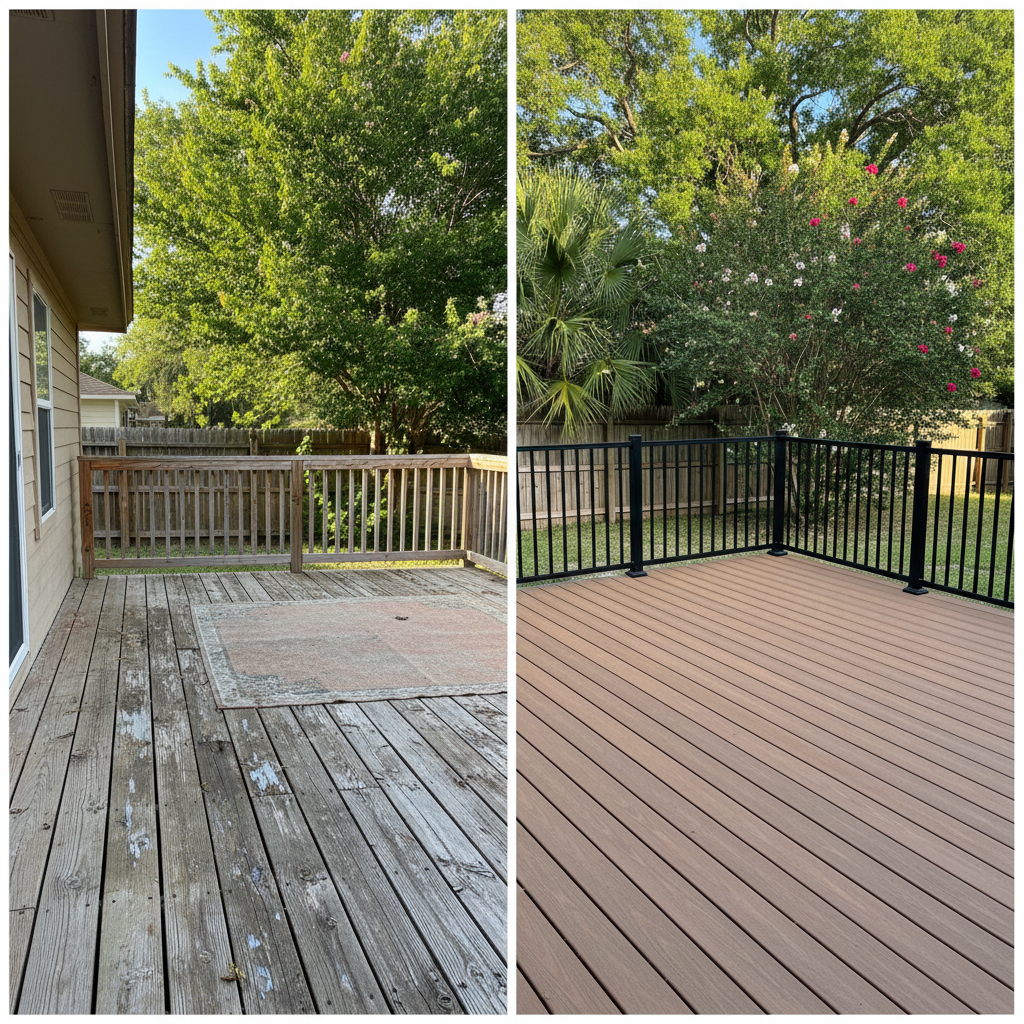
Alright, so you're thinking about a composite deck for your place here in Brownsville. Good choice. Composite materials have come a long, long way, and they're a solid alternative to wood, especially with our humidity and sunshine. But when you start looking, you'll quickly run into two main types: capped and uncapped composite decking. What's the deal with them, and which one makes more sense for your backyard?
The OG: Uncapped Composite Decking
Let's start with uncapped. This is the original composite decking. It's usually a mix of wood fibers and recycled plastics, pressed together to form a board. It was a big step up from wood in terms of not rotting or splintering, which is a huge win around here where wood just loves to warp and split in the heat.
The main thing to know about uncapped composite is that its surface is exposed. It's porous, meaning it can absorb moisture and stains. Think of it like a dense piece of wood, but made of plastic and wood dust. It's still pretty durable, but it's not invincible.
- Cost: Generally, uncapped composite is the more budget-friendly option upfront. It's less complex to manufacture, so it costs less to buy.
- Durability: It's tough against rot and insects, absolutely. But because it's porous, it can fade over time, especially with our intense South Texas sun. It's also more susceptible to mold and mildew if not cleaned regularly, and stains from things like spilled BBQ sauce or grease can be harder to get out.
- Maintenance: You'll need to clean it more often. Pressure washing (carefully, not too high a PSI!) and scrubbing with a good deck cleaner are usually required to keep it looking decent. You might even need to sand and reseal it every few years to refresh its appearance, which kind of defeats some of the 'low maintenance' appeal of composite, doesn't it?
- Appearance: The colors tend to be more muted, and the grain patterns less realistic. They can look a bit more 'plastic-y' than the newer options. And that fading I mentioned? It's a real thing down here.
The New Kid on the Block: Capped Composite Decking
Now, capped composite is where the real innovation has happened. Imagine that uncapped core, but then they put a super-durable, protective shell all around it – like a candy coating. This cap is usually made from a high-performance polymer. It's bonded to the core during manufacturing, creating a board that's much more resistant to the elements.
This cap is what makes all the difference. It's non-porous, so it doesn't absorb moisture or stains. It's designed to withstand fading, scratching, and general wear and tear a lot better than its uncapped cousin.
- Cost: Capped composite will cost you more upfront. There's more technology and material involved in making it, so the price reflects that. However, when you factor in the reduced maintenance and longer lifespan, that initial investment often pays off.
- Durability: This is where capped composite shines, especially for Brownsville. That polymer cap is built to resist UV rays, so fading is significantly reduced. It's also highly resistant to mold, mildew, and stains. Spilled a drink? Just wipe it up. Scratches? They're much less likely to show. It's a workhorse, truly.
- Maintenance: This is the closest you'll get to 'set it and forget it' with a deck. A simple sweep and occasional wash with soap and water are usually all it takes to keep it looking great. No sanding, no sealing, no heavy-duty scrubbing required. That's a big deal when you've got better things to do than clean your deck every weekend.
- Appearance: Modern capped composites look fantastic. Manufacturers have gotten really good at mimicking natural wood grains and colors, often with multi-tonal streaking for a more authentic look. The color stability is also a huge plus; your deck will look vibrant for years.
My Recommendation for Brownsville Homeowners
Look, I've been building decks for a long time here in Brownsville, and I've seen what our climate does to materials. The intense sun, the humidity, the occasional downpour – it all takes a toll. We're not talking about a gentle climate here; we're talking about conditions that test everything.
Given all that, my clear recommendation for homeowners in Brownsville, TX, is to go with capped composite decking. Yes, it's a bigger investment initially, but the long-term benefits far outweigh that extra cost.
Think about it: you're installing a deck to enjoy, not to constantly maintain. With uncapped, you'll be fighting fading, scrubbing stains, and potentially dealing with mold more often. That's time and effort you could be spending relaxing on your deck instead.
Capped composite, on the other hand, is built for our conditions. Its superior resistance to UV, moisture, and stains means it will look better, last longer, and require significantly less work from you. You'll spend less time cleaning and more time enjoying your outdoor space, which is the whole point of a deck, right?
At Primetime Decks Brownsville, we lean heavily into capped composite for our installations because we know it delivers the best value and performance for our customers down here. You want a deck that stands up to the Brownsville sun and humidity, and capped composite does just that. It's the smart choice for a beautiful, low-stress outdoor living area.